Logo

ITM 2013

ITM 2013

ITM 2013

Nosy Be Hotel

    • Home
    • Sitemap
    • Contact
  • Login
    Close


    • Forgot your password?
    • Forgot your username?
    • Create an account
  • Search
    • DISCOVER MADAGASCAR
    • KEY FACTS
      • Plan your visit
      • While you're here
      • Useful advice
    • THINGS TO DO
      • Coast and sea
      • Nature
      • People and culture
      • Sports and adventure
      • Luxury travel
      • Sustainable tourism
    • THINGS TO SEE
      • National Parks
      • 6 world heritage-classified parks
    • Avis de marché
      • Stand building – Europe 2012
      • Observation et état des réservations
      • Agence de représentation en France
Madagascar sea
madagascar culture
Madagascar luxury travel
Madagascar sport and adventure
Madagascar nature
Madagascar sustainable tourism
Home DISCOVER MADAGASCAR

discover madagascar
Antananarivo
15
23

Antsirabe
21
23

Fianarantsoa
20
23

Diego Suarez
21
22

Fort Dauphin
23
24

Majunga
25
26

Morondava
23
24

Nosy Be
20
23

Sainte Marie
23
24

Sambava
20
21

Other cities
Movement of aircraft
discover madagascar

 discover madagascar


  • THE HUMAN SETTING


Long before the people of the North discovered the Indian Ocean and the Southern Pacific, important migration fluxes had already taken place there; several of them included Madagascar as a stop-over or a destination.  In the context of the evolving melting pot resulting from migration, social groups took the habit of defining themselves in relation to their environment. Thus, the Sakalava for instance define themselves as « the- people-of-the-small-valley-that-cuts-through-the-big-one », the Tanala «People-of-the-forest » or the Merina « People-of-the-Highlands » ; the Antandroy are the « The-people-living-in-thorns » and the Antemoro « Men-of-the-shores ».

Nowadays, the population counts a little less than 20 million inhabitants, split between 18 ethnic groups and a multiplicity of social sub-groups.

  • THE LAND

        Madagascar boasts 5,000 kilometers of coast, is 592,000 km²  wide, and its highest peak is Mount Maromokotra which is located 392 km off East Africa’s coast.  The geography of the island is relatively simple.  From North to South, high reliefs and a series of lake basins run through the center.  Erosion is variably important, having created spectacular sites such as Isalo.

The coast is rather different from one side to the other.  In the East, it is narrow, due to the fact it is trapped between the edge of the Central Lands, sometimes referred to as “the cliff”, and the Ocean.  In the West and the South, reliefs progressively decrease in slope to the level of a wide plain, which is often interrupted by large majestic rivers.  Madagascar, the “small continent” is surrounded by a multiplicity of islets, some of which are grouped in archipelagos. 

  • THE SEA


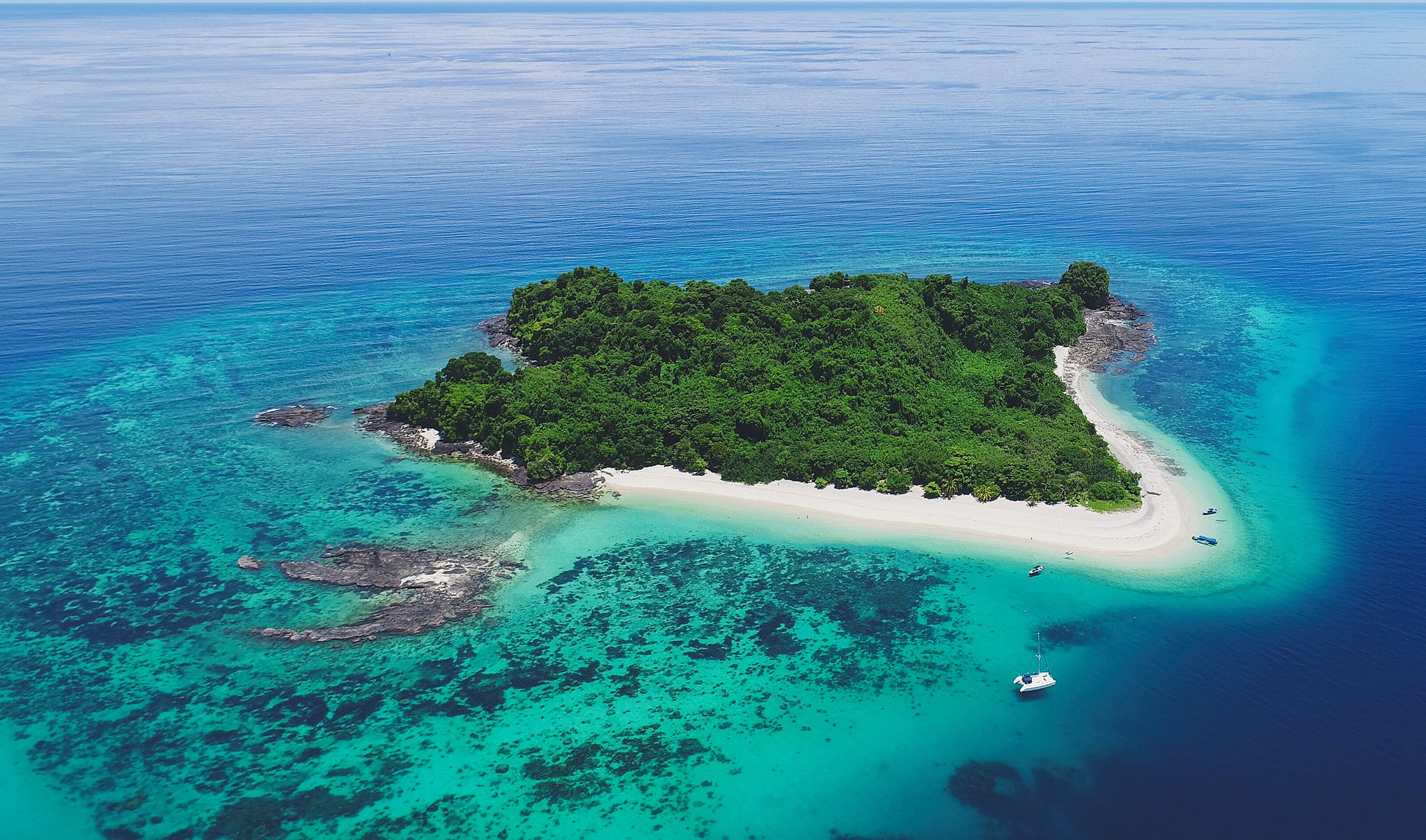
Madagascar’s seashore is approximately 5,000 kilometers long.  The most popular sea is located in the North West.  Its creeks, harbors and islets make it ideal and popular for leisure boating.  From Majunga to Tuléar, the mild-sloped coast has mostly remained in its wild state, and traditional dhows elegantly sail along it.  The arch formed by the Southern coast before joining the Indian Ocean can be described as the end of the world, quite literally, given the fact that only Antarctica can be found beyond; it is decorated with isolated fishermen’s villages, pristine sand dunes, waves that meet surfers’ expectations.  From Fort Dauphin onwards, the coast takes a strangely straight shape, up to Baie d’Antongil’s indentation.  Underwater, Madagascar’s well-located coral reefs are among the world’s most beautiful diving sites.  


  • THE OUTRIGGER CANOE


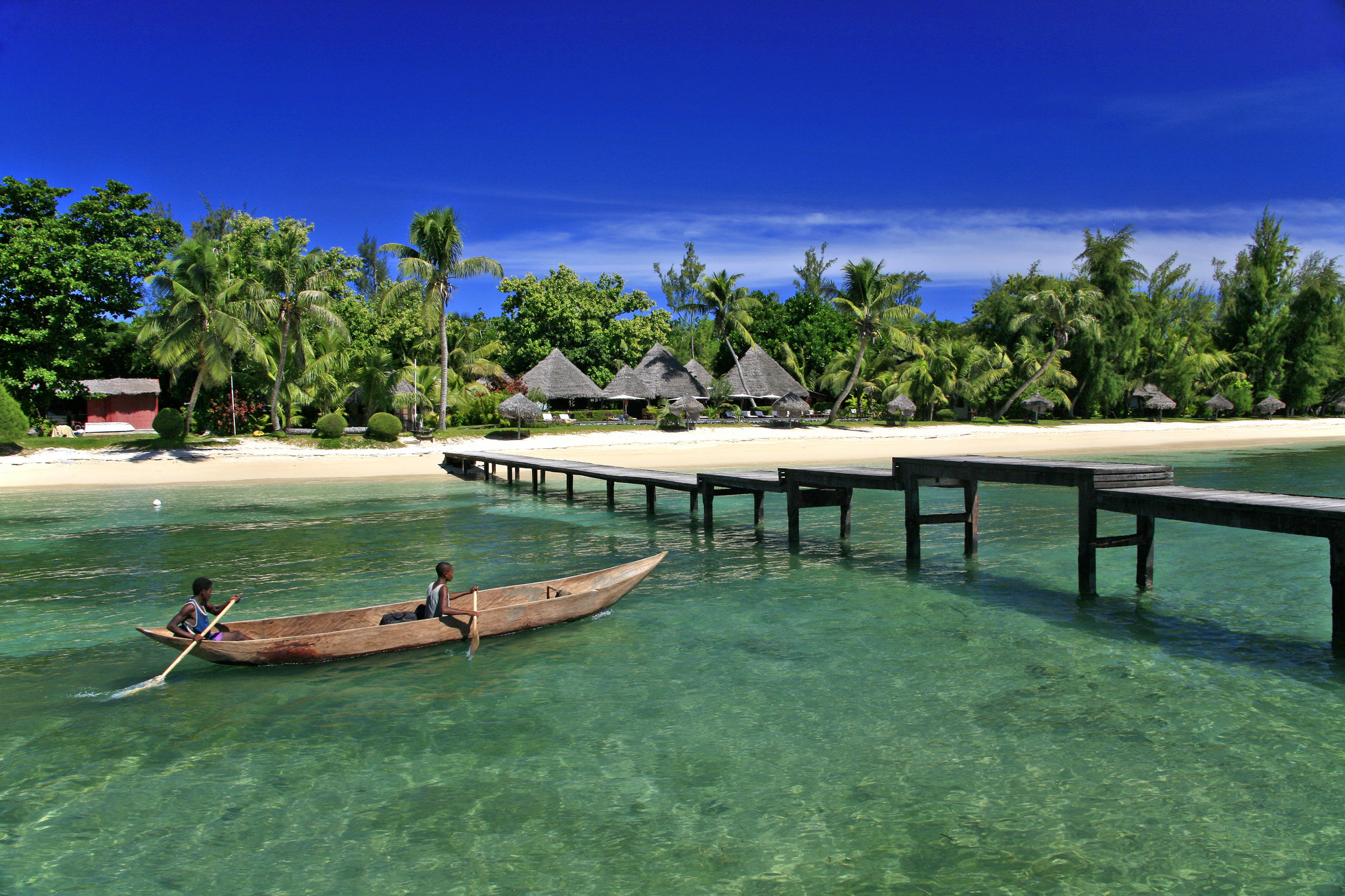
       The outrigger canoe, more commonly called pirogue, is an important part of the idyllic fishermen’s villages scenery. It also helped researchers trace back the itineraries of early human settlements on the Big Island.  Its almost-square-shaped large sail can be turned into a tent while camping.  The pirogue’s equipment also consists of two other original pieces:  a large rock to be used as the anchor and half a coconut shell, used to bail water out of the pirogue. 

       In addition to being used for fishing and transport, the pirogue constitutes an important element in a few rituals.  Historical narratives also document that pirogues had been used in the 18th and 19th century for raids undertaken far away, without any navigational instrument, as well as for whale hunts.  For the Vezo fisherman who stays on land only during the challenging weather period and to repair, the pirogue constitutes a real companion and his real place of residence.


  • ANCESTORS

       Madagascar is renowned as the country of Ancestors’ Cult.  In the traditional belief, ancestors or Razana continue to be present and acquire more authority because they are closer to the Creator or Zanahary.

       In some regions of the South, tombs are real mausoleums painted with bright colors, and where sadness is nowhere on the agenda. Funerary stelae are lively and realistic pieces of art.  One can communicate with royal ancestors!  Their responses are transmitted via an intermediary called Saha in the North, during a ritual trance-like state called Tromba.  The ritual takes place in a raunchy atmosphere where good music, food and rum are all available to one’s content.


  • CELEBRATIONS AND RITUALS

       All regions in Madagascar have their mutiplicity of colorful rituals, during which the present merges with the past.  In Antananarivo, several noble castes continue to celebrate the Malagasy New Year or Alahamady and attempt to revive its past prestige.  A more deeply rooted celebrated ritual is the Tsanga-tsainy, organised every 5 years by the Antakarana in the North.  The national flag of the Republic is elevated along with the royal crescent-and-red-star flag. 


  • RICE


       In Madagascar, visitors are advised to respect children, mothers, the elderly and rice fields.  A Malagasy will not invite you  for “lunch“, but literaly to « share his/her rice ».

       Rice is ever-present in some of the traditional proverbs, which so elegantly illustrate the Malagasy language :

-            You balk at working hard, yet you want good quality early harvested rice !

-            Love is like a young plant of rice : transplanted, it grows somewhere else.

-            Do not sing your own praises like the boiling rice in its pot !

-            Sorrow is like rice in a granary: its quantity decreases everyday.

-            Behave as an ear of rice : standing straight is good, knowing how to bow is better.


And many more…

BON APPETIT !!!


Stay informed

Subscribe to our newsletter :

Members and associations
  • Private organization acknowledged by State, the Madagascar National Tourism Board  was created in 2003. It includes all professions, regions and tourist operators and a representative of…
    Read more...
Vanilla Islands
  • Vanilla Islands is an affiliation of the island nations Seychelles, Madagascar, La Réunion and Mauritius in the Indian Ocean to form a new…
    Read more...
Who are we?
Terms and conditions
Useful adress
Press review
Midi Madagascar
L'Express de Madagascar
La Gazette
Mémento
Contact Us
Feed back
Kiosks
Representatives
* fb twitter flirk * flirk youtube

Copyright madagascar-tourisme.com ©2012. All rights reserved - Website produced by Ingenosya

madagascar-tourisme.com talking about otherwise of Madagascar and enhances tourism in Madagascar